
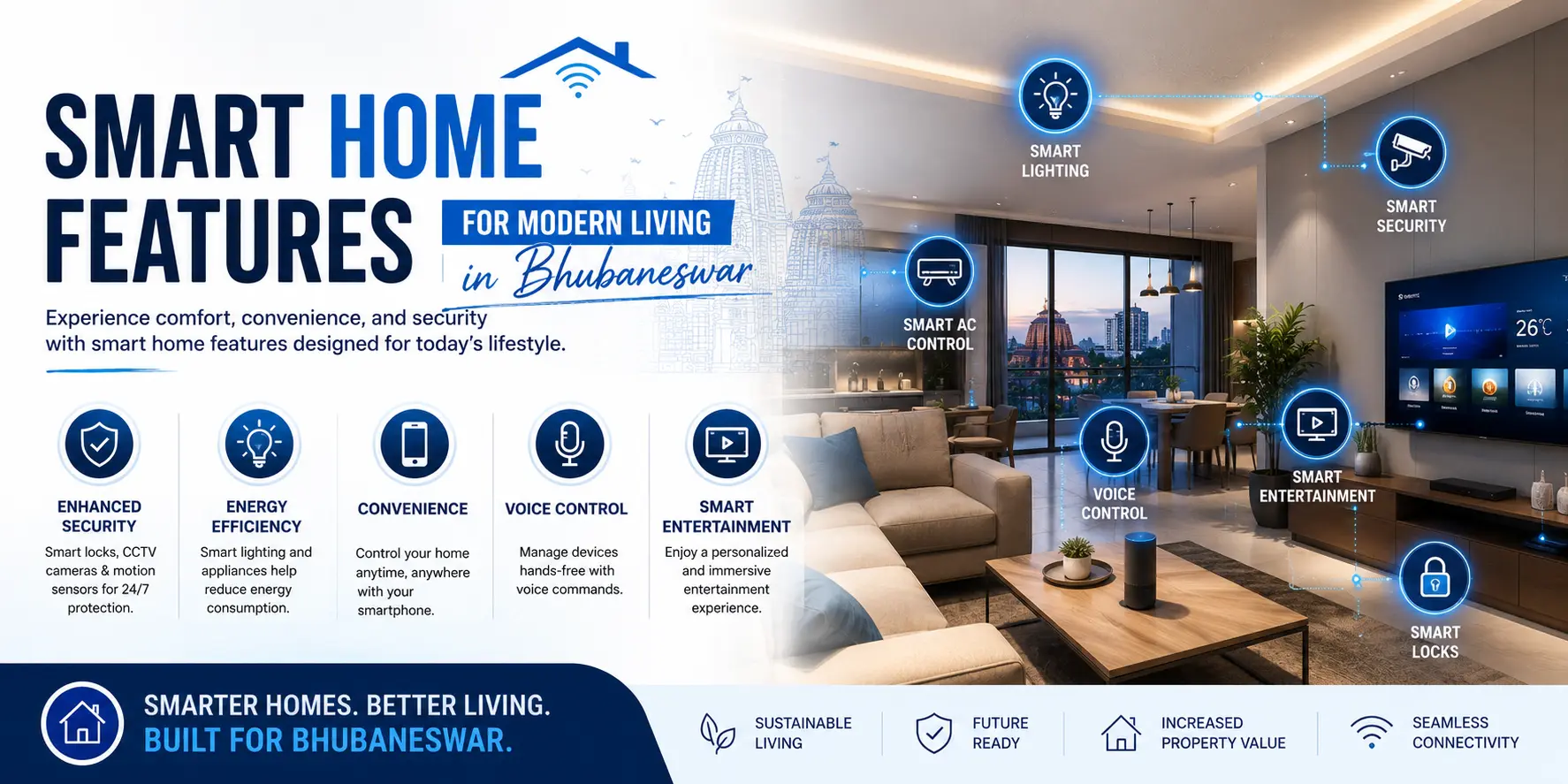
Smart home technology has moved well past being a futuristic novelty — it's now a practical, increasingly expected part of how new homes are designed and used. For buyers in Bhubaneswar evaluating a new property, smart features aren't just about convenience; they directly affect daily comfort, household running costs, and long-term resale appeal. Here's what's actually worth prioritising.
Why Smart Features Matter More Than They Used To
A decade ago, "smart home" usually meant a single voice-activated speaker. Today, it spans security, energy management, and everyday convenience — and the cost of adding these systems has fallen enough that they're realistic for mid-range homes, not just luxury villas. For homebuyers, the right combination of features can meaningfully reduce monthly running costs while improving safety and comfort.
Smart Security Systems
Video door phones, motion-sensor lighting, and app-based CCTV access let homeowners monitor their property remotely — particularly valuable for working professionals and NRI owners who aren't home during the day.
Smart Door Locks
Keyless entry via PIN code, fingerprint, or app removes the daily hassle of physical keys and allows temporary access codes for guests, domestic help, or deliveries without needing to be physically present.
Energy-Efficient Lighting and Appliances
LED lighting with motion or schedule-based automation, combined with energy-star rated appliances, can noticeably reduce monthly electricity bills — a real, ongoing saving rather than a one-time convenience.
Solar-Ready Infrastructure
Homes pre-wired for rooftop solar installation let owners add panels later without expensive retrofitting — an increasingly important consideration as power costs rise and solar incentives expand.
Smart Water Management
Leak detection sensors and automated irrigation for any garden or lawn space help prevent water wastage and catch plumbing issues before they become expensive repairs.
Climate and Air Quality Control
App-controlled thermostats and air purification systems let residents pre-cool or ventilate rooms before arriving home — particularly useful in Bhubaneswar's hot, humid climate.
Centralized Home Automation Hub
A single app or panel controlling lighting, security, and climate systems together — rather than several disconnected apps — is what separates a genuinely smart home from a collection of gadgets.
What to Actually Check When Buying
Not every "smart home" claim from a builder holds up in practice. Before finalising a purchase, it's worth specifically asking:
- Which smart features are pre-installed versus available only as a paid add-on
- Whether the wiring and infrastructure support future upgrades (like solar or additional security cameras)
- If the security system integrates with the broader gated community's surveillance network
- Whether systems work reliably during power outages or rely entirely on grid electricity
Modern Homes, Built for Modern Living
Explore duplex homes at Akshita Vatika Phase 2 designed with practical, future-ready infrastructure.
Schedule a Site Visit →Smart Features and Long-Term Resale Value
Beyond day-to-day convenience, homes with well-integrated smart features tend to stand out positively to future buyers, who increasingly see this infrastructure as a baseline expectation rather than a premium extra. A home that's already wired for these systems saves the next owner both money and disruption.
Conclusion
Smart home features are no longer about novelty — they're about practical comfort, measurable cost savings, and future-proofing a property investment. For anyone evaluating new homes in Bhubaneswar, it's worth looking past the marketing language and asking specifically what's built in, what's upgradeable, and how well it all works together.